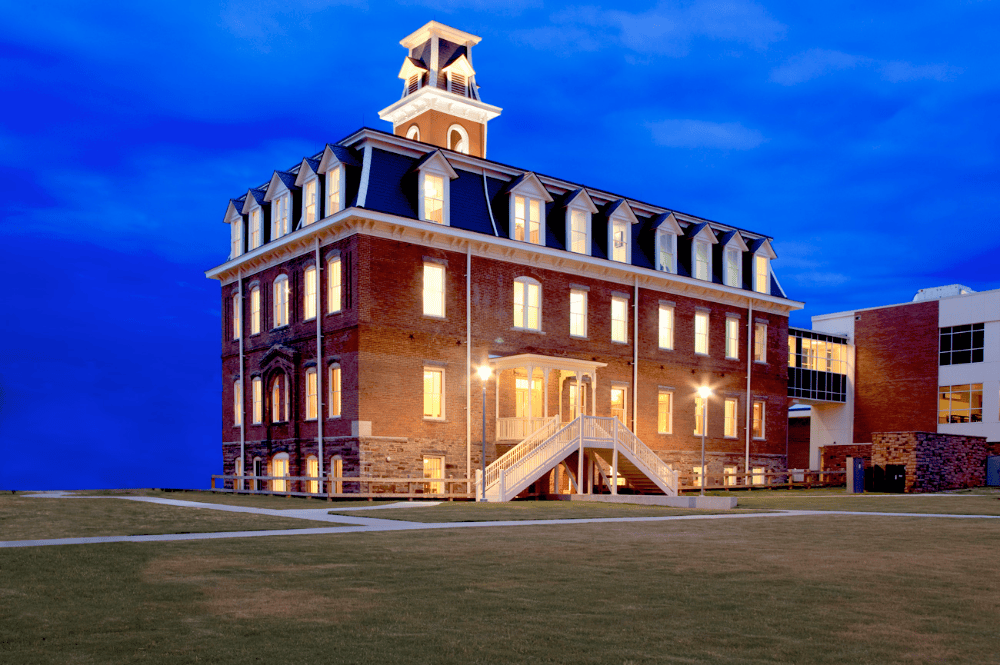
Arkansas Baptist College has terminated President William “Bill” Walker Jr. less than a year into his presidency. The reason remains publicly unclear, but the larger story may not be about one president at all. It may be about governance, instability, transparency, and what happens when an institution keeps changing leaders while its problems remain.
The Issue
Another president is gone at Arkansas Baptist College. William “Bill” Walker Jr., who became president of the historic Little Rock HBCU in October 2025 after previously serving on its Board of Trustees and briefly as interim president, was terminated on August 24, 2026. His presidency lasted less than a year.
The circumstances surrounding his departure remain unclear. The Board of Trustees has confirmed that Walker was terminated following a review, but it has not publicly detailed the specific reasons for its decision. Trustee Gene McKissic has said Walker was presented with concerns and given an opportunity to address them before the board affirmed the recommendation to terminate him. Walker has offered a different account, saying he was terminated for alleged cause but was unable to obtain a clear explanation of the specific conduct that constituted that cause.
Those competing accounts leave important questions unanswered. However, I want to be careful here because we do not currently have enough verified public information to determine whether Walker’s termination was justified. We should not manufacture facts simply because the institution has not provided them. If the board had legitimate reasons to remove him, it had a fiduciary responsibility to act. If Walker was terminated for cause, he deserves clarity regarding that cause. Both of those statements can be true.
What we can examine is the larger pattern surrounding Arkansas Baptist College, and that pattern should concern anyone who cares about the future of HBCUs.
This Is Bigger Than Bill Walker
If this were simply a story about one president being terminated, it might eventually become another personnel matter in higher education. It is not. Arkansas Baptist College has experienced extraordinary presidential turnover. The college’s own historical record shows Calvin McFadden serving as president from 2023 to 2024, Regina Favors serving in an interim capacity in 2024, Leslie McClellon Rodriguez serving from 2024 to 2025, George Herts serving on an interim basis in 2025, Walker serving from 2025 to 2026, and Herts now returning to interim leadership.
That level of turnover is not normal leadership succession. It is institutional instability. When leadership changes this frequently, we have to stop treating every presidential departure as an isolated event. At some point, the question must move beyond what happened to the latest president and become something much more uncomfortable: What is happening to the institution?
That distinction matters because presidents do not operate in isolation. They inherit financial conditions, organizational cultures, personnel structures, enrollment realities, accreditation concerns, deferred maintenance, previous strategic decisions, board relationships, and sometimes years of unresolved institutional problems. Changing the person sitting in the president’s office does not automatically change the environment surrounding that office.
A Historic Institution Under Enormous Pressure
Arkansas Baptist College deserves to be understood within its full historical context. Founded in 1884 as the Minister’s Institute, the college was established by Black religious leaders during an era when educational opportunities for African Americans were deliberately restricted. The institution became an important center for educating Black students in Arkansas and remains a significant part of the history of Black higher education.
That history matters, but history cannot protect an institution from contemporary realities. Arkansas Baptist has faced serious financial and operational challenges, including enrollment decline, payroll problems, staffing reductions, and accreditation-related pressures. Walker himself acknowledged following his termination that the institution had been operating under self-imposed financial exigency while working through audits, campus needs, and preparations related to a Higher Learning Commission Show-Cause process.
That is an extraordinarily difficult operating environment for any president, particularly at a small, tuition-dependent HBCU. When enrollment is limited, every student matters financially. When unrestricted revenue is scarce, unexpected expenses become more consequential. When payroll problems emerge, the effects extend beyond accounting statements into employee morale, retention, recruitment, and institutional reputation. When accreditation concerns are added to those pressures, leadership becomes even more consequential.
This is precisely why stability matters.
You Cannot Turn Around an Institution With a Revolving Door
Higher education loves the language of transformation. Boards hire presidents and expect them to increase enrollment, raise money, repair facilities, strengthen academics, improve retention, balance budgets, develop community partnerships, increase alumni engagement, address accreditation, strengthen internal controls, rebuild morale, and fix whatever previous administrations did not resolve. Then, sometimes, we become impatient when transformation does not happen quickly enough.
Institutional transformation does not happen in twelve months. In many cases, it does not happen in three years. A president cannot develop and execute a meaningful strategic plan when the institution is constantly resetting the clock. Senior administrators cannot build durable systems when every presidential transition creates uncertainty about priorities, reporting structures, staffing, and strategy. Faculty and staff cannot develop confidence in leadership when they are constantly wondering who will occupy the president’s office next year.
The consequences extend beyond campus. Donors notice leadership instability. Accreditors notice it. Prospective students and their parents notice it. Employees notice it. Presidential candidates notice it. Eventually, instability can become self-perpetuating because the more unstable an institution appears, the harder it may become to attract experienced leaders willing to accept the risk associated with the position.
Repeated presidential turnover is therefore not simply a personnel issue. It is an institutional risk.
Now We Have to Talk About the Board
This is the uncomfortable part, but it is a conversation HBCUs cannot afford to avoid. When an institution cycles through president after president, governance has to become part of the examination. A Board of Trustees has one of the most consequential responsibilities in higher education: selecting, supporting, evaluating, and, when necessary, removing the president. Presidents lead institutions, but boards govern them.
When an institution repeatedly changes presidents while continuing to experience financial, enrollment, accreditation, operational, or organizational challenges, the board has an obligation to examine more than the individual occupying the president’s office. It must examine itself. Were expectations for the president realistic? Was the president given adequate authority to execute the responsibilities of the position? Was there a clearly defined turnaround strategy? Were measurable benchmarks established from the beginning? Was the board unified around those benchmarks? Did trustees remain appropriately within their governance role? Did the president have access to the financial, human, and operational resources necessary to execute the mandate?
There is another question that may be even more difficult to ask: Is the institution changing presidents because presidents keep failing, or are presidents being placed into a system that makes sustained leadership nearly impossible? I do not know the answer at Arkansas Baptist College, and the currently available information does not allow us to answer it responsibly. But after this many leadership transitions, the question deserves to be asked.
Board accountability is not anti-HBCU. Governance scrutiny is not disloyalty. In fact, strong governance may be one of the most important protections an HBCU can have during periods of institutional vulnerability.
Transparency Matters More During a Crisis
The circumstances surrounding Walker’s termination also raise questions about transparency. There are legitimate limits to what boards can publicly disclose regarding personnel matters. Employment law, contracts, confidentiality, litigation risk, and fiduciary responsibilities all matter. No responsible publication should demand that a college release confidential personnel information simply to satisfy public curiosity.
However, institutional stakeholders also deserve enough information to maintain confidence in governance. In this situation, the public has been told that Walker was terminated. A trustee says concerns were presented to him and that he had an opportunity to respond. Walker says he was terminated for alleged cause but was not given a clear explanation of what constituted that cause. That gap creates uncertainty.
Vague language creates a vacuum, and vacuums are eventually filled with speculation. For an institution already navigating financial pressure, accreditation concerns, enrollment challenges, and repeated leadership transitions, speculation is not harmless. It can affect employee confidence, alumni engagement, donor relationships, recruitment, and public perception.
The board does not owe the public gossip or confidential employment information. It does, however, owe the Arkansas Baptist College community confidence that its governance processes are fair, deliberate, and sound. Those are two very different expectations.
The President Is Not the Institution
When an HBCU struggles, we sometimes personalize institutional problems. We look toward the president and ask who was in charge, who made the decisions, who failed, and who should be removed. Sometimes termination is absolutely necessary. Presidents should be accountable for their leadership, decisions, and performance. Leadership has consequences.
But presidents are not institutions. Institutional problems can exist across decades, administrations, boards, financial systems, enrollment structures, deferred maintenance, organizational cultures, and governance practices. Replacing one person does not automatically repair any of those conditions. A new president does not erase debt. A new president does not immediately restore enrollment. A new president cannot instantly rebuild employee morale, manufacture unrestricted revenue, repair years of deferred maintenance, or resolve accreditation concerns through charisma.
Most importantly, a new president cannot succeed if the governance structure surrounding that presidency is dysfunctional. Leadership change without structural change can become little more than changing the driver while refusing to examine what is happening under the hood.
There Is a Human Cost to Institutional Instability
We should also resist discussing Arkansas Baptist College solely in terms of presidents, trustees, accreditation, and financial statements because there are people living through this instability. There are students attending classes, faculty members trying to teach, staff members trying to serve students, alumni who love the institution, families who trusted Arkansas Baptist College with their children, and employees who depend upon the institution for their livelihoods.
Every leadership crisis eventually reaches them. When payroll becomes uncertain, families feel it. When senior administrators leave, departments feel it. When enrollment declines, academic and administrative budgets feel it. When accreditation becomes uncertain, students and families feel it. When another president leaves, everyone is asked once again to trust that stability is coming.
That institutional fatigue is real. Sometimes our conversations about “saving HBCUs” become so focused on preserving institutions that we forget about the people inside them. An institution cannot be considered healthy simply because its doors remain open. Sustainability must also include the ability to provide students with a stable educational environment and employees with a functional workplace.
We Have to Stop Confusing Loyalty With Silence
I believe deeply in the importance of HBCUs, which is precisely why stories like this deserve scrutiny. Supporting an HBCU does not mean refusing to ask difficult questions about governance. Protecting an institution’s legacy does not require protecting dysfunction. Criticizing institutional practices does not mean rooting for an institution to fail.
If we genuinely believe HBCUs are indispensable to American higher education, then we should demand governance worthy of their missions. We should expect competent boards, accountable presidents, financial transparency, succession planning, strategic discipline, sound internal controls, and clearly defined responsibilities between trustees and administrators. Leaders who are doing the work should receive the support necessary to lead. Leaders who are not meeting reasonable expectations should be held accountable.
The same principle must apply to boards. Accountability cannot stop at the president’s office.
That may be an uncomfortable statement in higher education, but discomfort does not make it untrue. Trustees are stewards of institutions that existed before them and, if they govern well, should exist long after their terms have ended. Their responsibility is not merely to hire and fire presidents. Their responsibility is to protect the long-term viability, mission, assets, reputation, and academic integrity of the institution.
What Arkansas Baptist College Needs Next
Arkansas Baptist College does not simply need another president. It needs stability. Before beginning another presidential search, the institution should be brutally clear about what the next president is being hired to accomplish, what authority that individual will possess, what resources will actually be available, what institutional conditions are being inherited, how performance will be measured, and what role the Board of Trustees will play in supporting the work.
The next president should not walk onto campus carrying an undefined mandate to “save Arkansas Baptist College.” That is not a strategy. The institution needs a realistic stabilization and recovery framework addressing governance, finances, accreditation, enrollment, academic quality, human capital, infrastructure, fundraising, institutional advancement, and student success. The board and administration must also be willing to establish measurable milestones so progress can be evaluated objectively rather than through shifting expectations.
Then the institution needs leadership capable of executing that plan, and that leadership needs time. Not unlimited time. Not freedom from accountability. Not permission to ignore measurable outcomes. But enough time to actually lead.
The Ledger Question
William Walker’s presidency is over, and George Herts has again been called upon to provide interim leadership. Eventually, Arkansas Baptist College will have to determine who should occupy the president’s office next. But I hope the conversation inside that boardroom becomes much larger than identifying another candidate.
After this much leadership turnover, the most important question is no longer simply, “Who should be the next president of Arkansas Baptist College?” The more consequential question is, “What must change at Arkansas Baptist College so the next president actually has a chance to succeed?”
Arkansas Baptist College has existed since 1884. Generations of Black people built it, supported it, studied there, worked there, prayed for it, and believed in what it represented. That history deserves respect, but history also creates responsibility. We cannot invoke 1884 every time an HBCU faces an existential challenge while refusing to make the difficult governance, financial, and strategic decisions necessary to ensure that institution reaches 2084.
Presidents matter. Leadership matters. Accountability matters. But governance matters too. Sometimes the most important question after a president is fired is not why that leader is gone. It is why the institution keeps finding itself back in the same place.
The HBCU Ledger
Honoring Legacy. Recording Progress. Defining the Future.


Leave a comment